THE WARNING SIGN CHICAGO DIDN’T WANT
The Chicago Bears entered the preseason with optimism surrounding their offense.
There was a new head coach in Ben Johnson, a young franchise quarterback in Caleb Williams, and expectations that Chicago could finally build an offense capable of competing consistently.
But optimism can disappear quickly in the NFL.
One bad performance can expose weaknesses that looked manageable during training camp.
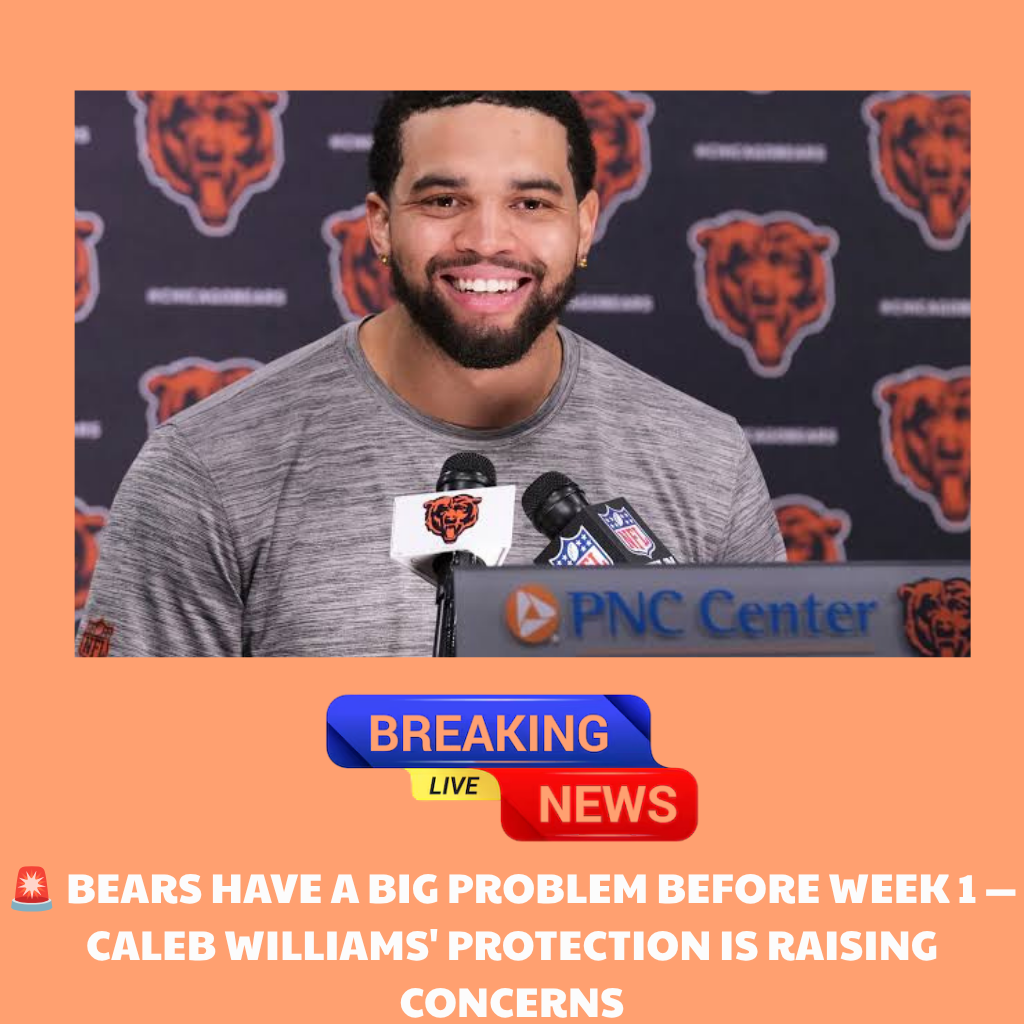
For the Bears, one of those weaknesses is protection.
Chicago’s offensive line has become one of the biggest questions surrounding the team as Week 1 approaches.
The issue isn’t necessarily that the offensive line is incapable of playing at an NFL level.
The concern is whether it can provide Williams with the time he needs to operate Johnson’s offense effectively.
That distinction could become extremely important.
WILLIAMS CAN’T DO EVERYTHING HIMSELF
Williams has already shown that he can create plays when things break down.
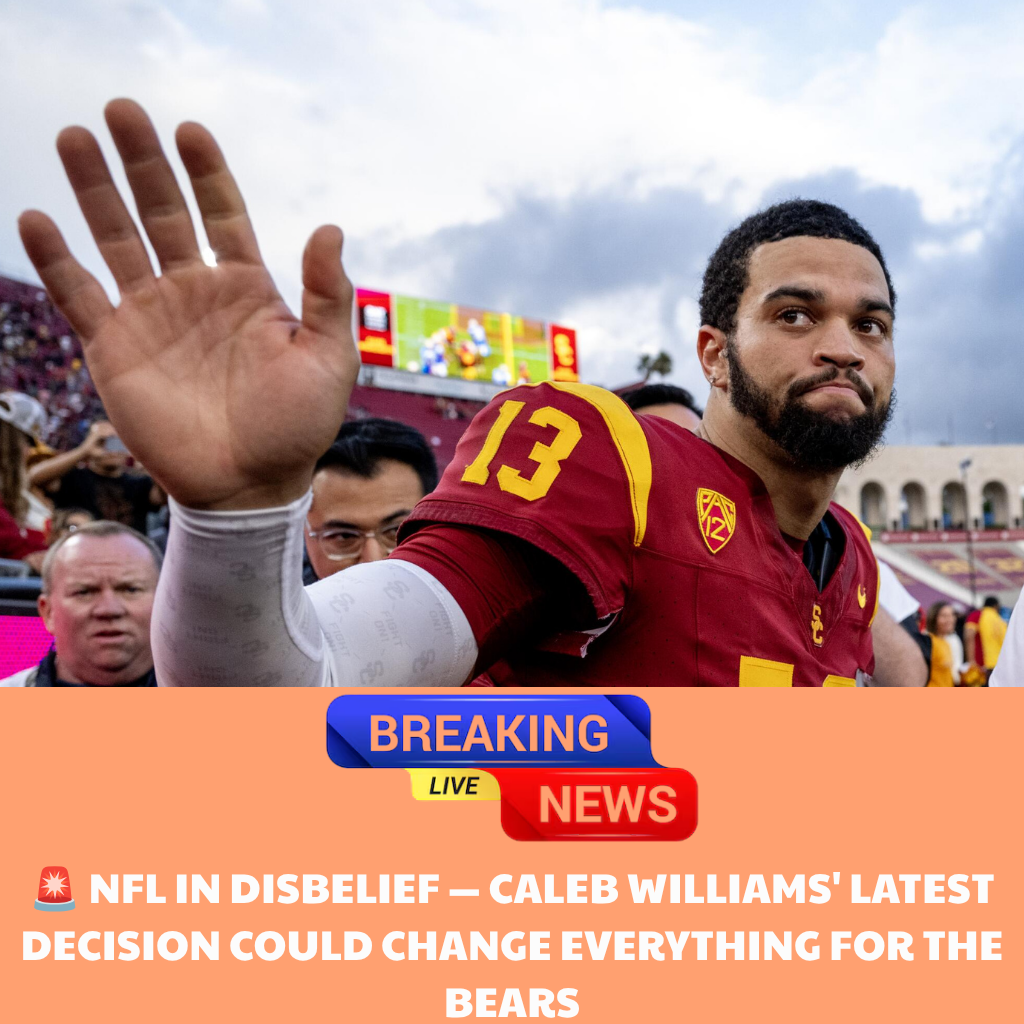
That’s one of the qualities that made him such an exciting prospect coming out of USC.
He can escape pressure.
He can extend plays.
He can throw from unusual platforms.
He can turn broken plays into explosive gains.
But there is a dangerous trap in relying too heavily on those abilities.
A quarterback shouldn’t have to make something extraordinary happen on every passing down.
Eventually, NFL defenses find ways to punish quarterbacks who constantly have to improvise.
That’s why offensive-line consistency matters so much.
Williams doesn’t need perfect protection.
He needs reliable protection.
THE BENGALS GAME RAISED QUESTIONS
Chicago’s preseason loss to Cincinnati provided plenty of reasons for concern.
The Bears were defeated 27–9, and the performance immediately generated questions about how prepared the offense was for the regular season.
Ben Johnson acknowledged afterward that he had a bad feeling about the performance.
For Bears fans, the biggest question wasn’t simply the final score.
It was what the game revealed.
Could Chicago protect its quarterback?
Could the offense establish rhythm?
Could the offensive line consistently create enough time for the passing game to develop?
Those questions became even more important because the Bears are building their offensive future around Williams.
WHY PROTECTION MATTERS FOR CALEB WILLIAMS
Quarterbacks develop differently.
Some thrive in structured passing situations.
Others are at their best when improvising.
Williams is capable of both.
But even an elite quarterback needs a clean pocket.
If defensive linemen consistently reach him before routes develop, the offense becomes predictable.
Receivers have less time to separate.
The running game can become harder to establish.
And Williams is forced to make decisions faster than coaches would ideally want.
That creates unnecessary pressure on a young quarterback.
BEN JOHNSON HAS A PLAN
The good news for Chicago is that Ben Johnson understands offensive football.
Johnson didn’t arrive in Chicago without a reputation.
He came to the Bears after building one of the NFL’s most respected offenses in Detroit.
His challenge now is to create an environment where Williams can play fast rather than constantly react to pressure.
That could mean using quick passes.
It could mean more movement before the snap.
It could mean getting Williams outside the pocket.
It could mean emphasizing the running game to prevent defenses from simply attacking the quarterback.
The Bears have options.
But the offensive line remains the foundation.
BRAxton JONES AND THE LEFT TACKLE QUESTION
One of the most closely watched positions has been left tackle.
Braxton Jones has been competing for the role, and his performance has attracted significant attention throughout camp and preseason.
For any quarterback, the blindside is critical.
For Williams, protecting the edge becomes even more important because of how defenses are likely to attack him.
If opposing pass rushers can consistently win one-on-one battles, Johnson will have to adjust the offense accordingly.
That isn’t necessarily disastrous.
Good offensive coordinators make adjustments.
But every adjustment comes with a cost.
THE BEARS DON’T NEED TO PANIC
Despite the concerns, there is an important reason not to overreact.
It’s still preseason.
Teams experiment.
Players receive different workloads.
Coaches don’t necessarily reveal their complete offensive game plan.
And offensive lines need time to develop chemistry.
Five players have to operate as one unit.
A tackle must know exactly when the guard is helping him.
A guard must understand the center’s calls.
Running backs must recognize blitzes.
The quarterback must communicate protection adjustments.
That chemistry doesn’t appear overnight.
Chicago still has time to improve before Week 1.
WILLIAMS’ DEVELOPMENT IS THE BIGGER STORY
Ultimately, the offensive line discussion isn’t really about five individual players.
It’s about Caleb Williams.
Chicago needs to determine what kind of quarterback Williams can become in Johnson’s system.
The Bears don’t need him to throw for 400 yards every week.
They need him to make good decisions.
They need him to protect the football.
They need him to convert third downs.
And most importantly, they need him to stay healthy.
That’s why protection has become such a major storyline.
A quarterback cannot develop from the sideline.
DEFENSES WILL TEST CHICAGO
NFL defenses aren’t going to wait for the Bears to solve their problems.
Once the regular season begins, defensive coordinators will study every weakness they can find.
If opponents believe Chicago’s offensive line struggles against certain blitz packages, they’ll attack those weaknesses.
If a particular tackle struggles against speed rushers, expect teams to target him.
If Williams holds the ball too long searching for explosive plays, defenses will send pressure.
This is the chess match Johnson and his staff must prepare for.
THE RUNNING GAME COULD HELP
One solution could be establishing a dependable rushing attack.
A strong running game can take pressure away from a quarterback.
It forces defenses to respect play-action.
It slows down pass rushers.
And it gives an offense another way to control the game.
For Chicago, that could be especially valuable.
If the Bears can consistently run the football, Johnson won’t have to ask Williams to throw 40 or 45 times every Sunday.
That could make the quarterback’s job considerably easier.
DON’T FORGET WILLIAMS’ BIGGEST STRENGTH
There is another reason Bears fans shouldn’t panic.
Williams’ ability to create outside the pocket can actually help compensate for imperfect protection.
He has the athleticism to escape.
He has the arm strength to throw on the move.
And he has demonstrated the confidence to attempt difficult throws.
The key is balance.
Chicago shouldn’t build an offense that requires Williams to make impossible plays.
Instead, the Bears should build an offense that gives him opportunities to make those plays when necessary.
There’s a major difference.
WEEK 1 IS GETTING CLOSER
The preseason is rapidly coming to an end.
That means the Bears have limited time to answer their biggest questions.
The offensive line doesn’t need to become perfect.
But it needs to become dependable.
Because once Week 1 arrives, there are no more preseason excuses.
Every sack matters.
Every hit matters.
Every third-down conversion matters.
And every possession could determine the outcome of a game.
THE PRESSURE IS ON
Chicago has invested heavily in the future.
Williams was selected No. 1 overall in the 2024 NFL Draft.
Johnson was hired to help build an offense around him.
The organization has surrounded the quarterback with talented offensive weapons.
Now the offensive line has to do its part.
That’s why this storyline is bigger than one preseason game.
It’s about whether Chicago can protect the player who represents the franchise’s future.
FINAL VERDICT
The Bears don’t necessarily have a crisis.
They have a warning sign.
And that’s something worth paying attention to before Week 1.
Caleb Williams possesses the talent to become one of the NFL’s most exciting young quarterbacks.
Ben Johnson has the offensive expertise to maximize that talent.
But neither player can completely overcome persistent problems in the trenches.
If Chicago’s offensive line improves, the Bears could enter the regular season with legitimate momentum.
If the protection problems continue, however, opponents will almost certainly test them relentlessly.
And suddenly, every conversation about Williams’ potential will come with another question:
Can the Bears give their franchise quarterback enough time to show what he can really do?
For Chicago, that’s the question that needs an answer before the opening kickoff.
Because protecting Caleb Williams isn’t just about protecting one player.
It’s about protecting the future of the entire franchise.