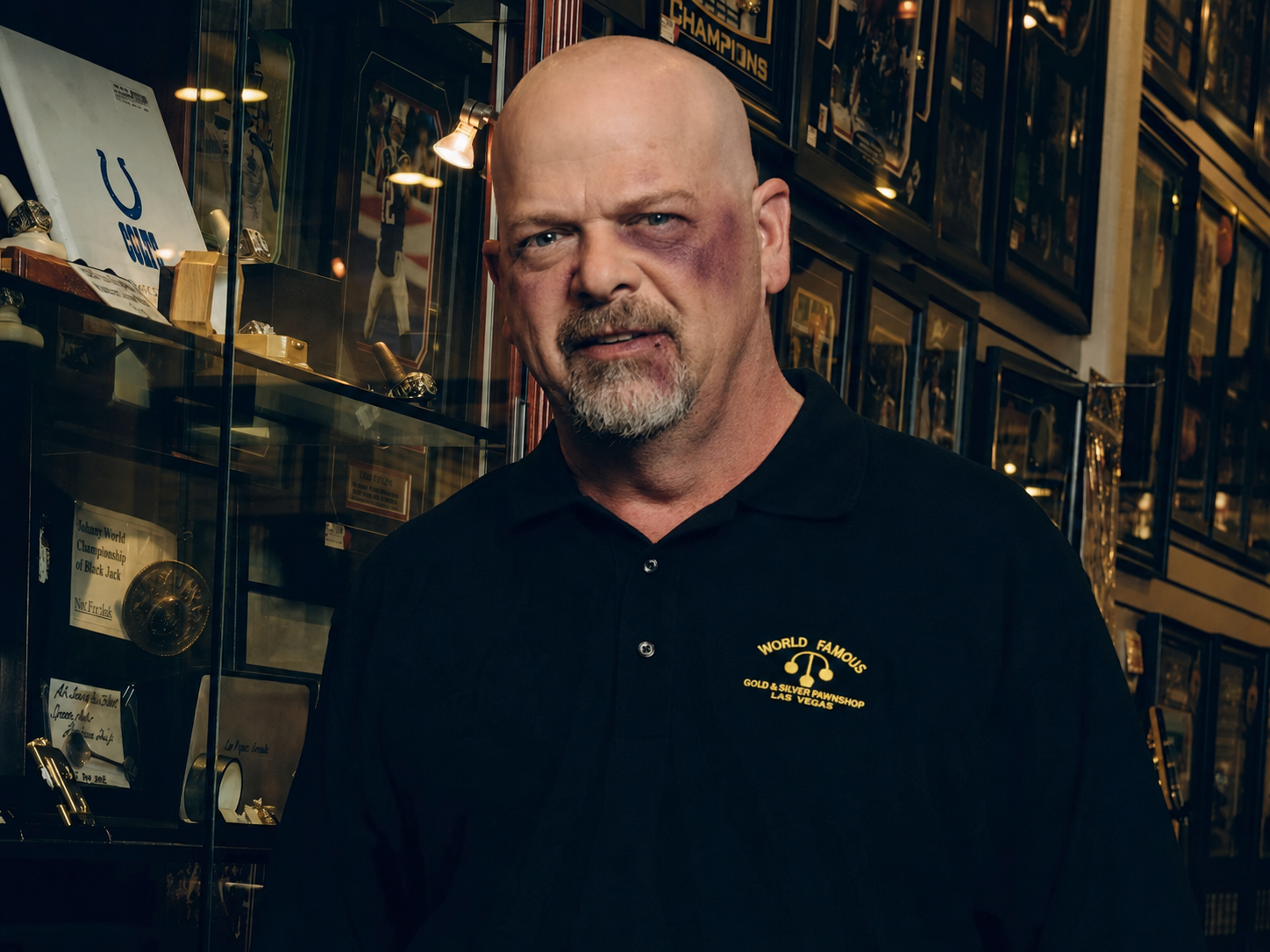
Rick Harrison, the no-nonsense patriarch of the pawn shop Gold & Silver Pawn in Las Vegas, has become a household name for his sharp wit, shrewd bargaining, and occasional explosive moments on the hit History Channel series Pawn Stars. Fans of the show have long appreciated Harrison’s storytelling, his expertise in antiques and collectibles, and his unfiltered honesty. But behind the camera and on screen, Harrison has repeatedly shown a deep disdain for poor attitudes, especially when they affect business operations, family dynamics, or customer relations. Whether it’s dealing with unreliable staff, impulsive purchases by his son Corey, or customers who try to scam him, Harrison’s rants reveal a boss who values work ethic, professionalism, and respect above all else. His frustration isn’t just theatrical drama—it reflects real frustrations in running a high-pressure retail business where one bad attitude can sink deals and erode profits.
Harrison’s philosophy stems from years of experience in the pawn business, a field that demands flexibility, resilience, and quick thinking. As the son of legendary pawn shop owner Richard “Old Man” Harrison, Rick inherited a legacy but also learned the hard way that attitude can make or break a deal. In one memorable episode, Corey purchased a 1984 Chris Craft boat without first testing it, despite Rick’s clear warnings about safety and the boat’s condition. The conversation quickly escalated when Corey defended his choice. “What were you doing out there with that boat?” Rick asked sternly. Corey replied defiantly, “I bought it.” Harrison’s response was blunt: “Doesn’t take many stupid decisions like this to sink a company. It is my money.” The exchange highlighted Harrison’s core belief: if you’re not willing to put in the effort to do something right, you shouldn’t be involved. This wasn’t just about the boat—it was about protecting the family business from costly mistakes caused by poor judgment and lack of follow-through.
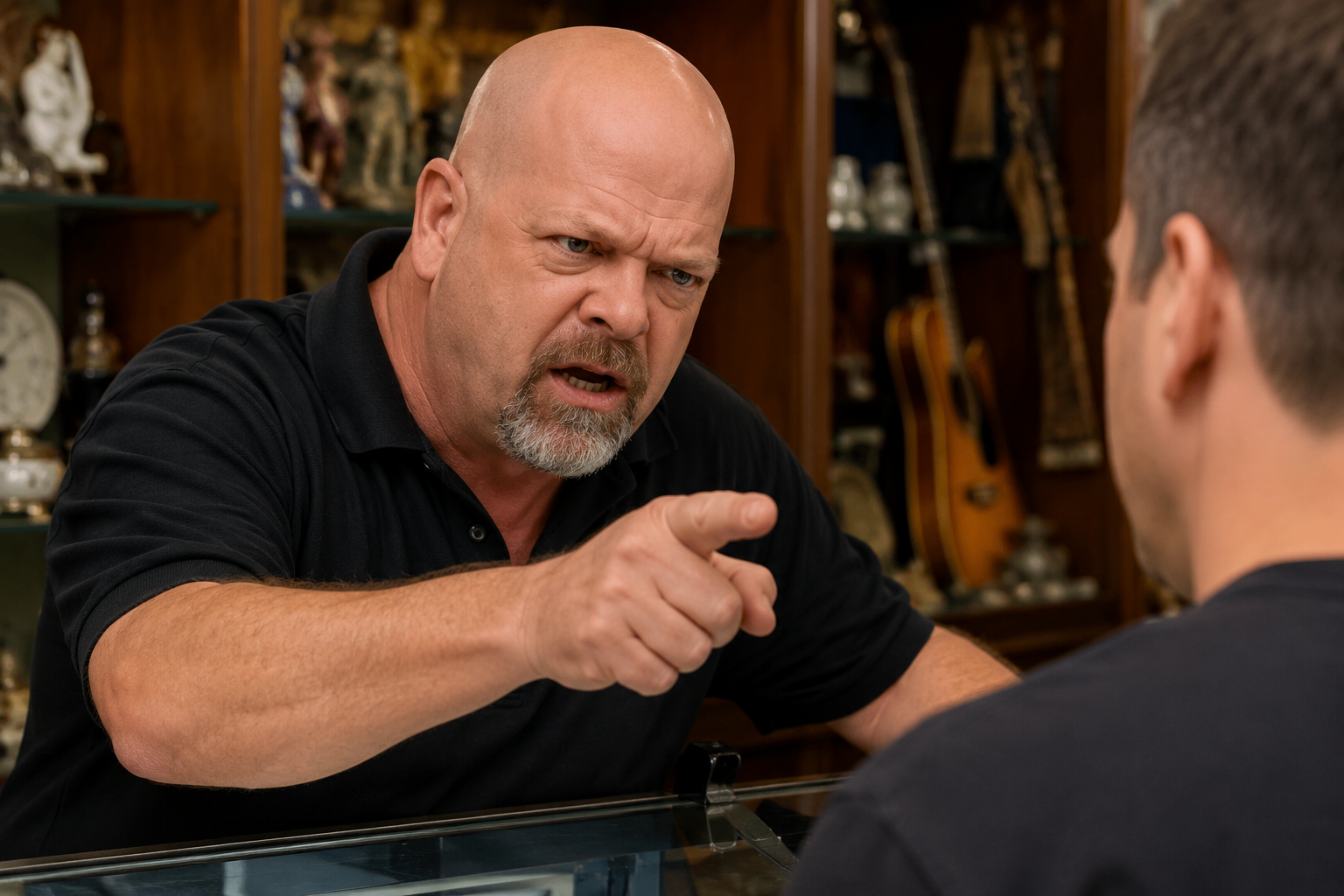
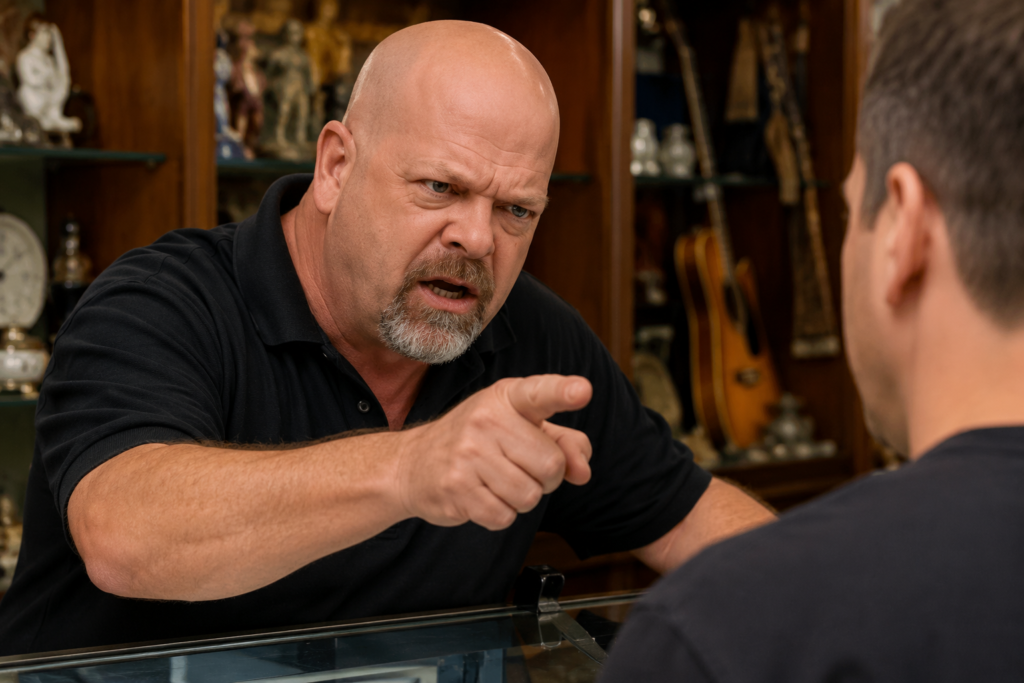
Harrison’s anger extends beyond family. He has also been vocal about customers who display arrogant or entitled attitudes. In episodes and compilations of deals gone wrong, Harrison often slams buyers who lowball him unfairly or who refuse reasonable offers. For instance, sellers who bring in items expecting high payouts while insulting the shop’s expertise or the value of their goods often face his ire. One viral moment captured Harrison getting visibly angry at a customer who attempted to scam him during a deal involving jewelry. The interaction escalated quickly as Harrison’s patience, already thin, hit its limit. “Rick gets angry at a customer” clips have circulated widely, showing his ability to read people instantly and call out bad behavior without hesitation.
Compilations of “Deals Gone Wrong” and “Angry Sellers Lose Their Cool” frequently feature Harrison’s calm yet firm demeanor cracking when sellers or customers treat the shop disrespectfully. In one compilation, a seller who brought in a valuable item insulted the shop’s appraisers, calling the offer “insulting” and refusing to accept lowball figures. Harrison’s response was characteristic: he stood his ground, reminding everyone of fair market value. Fans have noted that Harrison’s anger isn’t random—it’s reserved for individuals who lack the work ethic needed in a competitive environment. “The best I can do is $20” replies, delivered with a smile and a story about the item’s history, often leave sellers feeling insulted, but Harrison maintains it’s his job to protect the business.
A particularly revealing aspect of Harrison’s attitude concerns the pawn shop employees themselves. Unlike many reality shows where cast members perform for cameras, Harrison has emphasized that the real team behind the scenes includes dedicated workers who handle the daily grind. Reports and interviews highlight that the on-screen family dynamics are supplemented by a professional staff that must navigate high customer volume, rare item appraisals, and security concerns. Harrison has spoken candidly about the “worst part” of his business being family involvement—implying that outsiders who treat the shop casually can be equally problematic. In one interview, he discussed how employees’ attitudes directly impact success: “You’ve got to have a dictator in here.” Without strict accountability and a strong work ethic, the shop would collapse under its own weight.
This focus on attitude isn’t new. Harrison’s father, Old Man Harrison, instilled similar values in the early days of the shop. Rick has carried forward the lesson that in business, especially one dealing in human nature like pawning, attitude determines outcomes. Sellers who arrive late, speak disrespectfully, or expect charity deals often leave without a transaction. Customers who arrive demanding special treatment or who haggle endlessly without reason irritate Harrison to no end. He has revealed in behind-the-scenes discussions that he sometimes “restrains” his temper but only after trying every other option first.
The impact of Harrison’s approach is clear in the show’s success and his real-life businesses. Gold & Silver Pawn continues to thrive because Harrison has built a culture where professionalism matters. He’s not one to tolerate “bad attitudes” that waste time or damage reputation. In a 2026 interview, Harrison discussed tax benefits for employees under new policies, noting that happy, dedicated workers make a big difference. “I’ve had at least 10 employees tell me that their tax return was kind of, you know, they considered it astronomical,” he said, underscoring the importance of retention and positive workplace culture.
Critics and fans sometimes misinterpret Harrison’s sternness as harshness. Some viewers argue he comes across as overly controlling, especially with Corey’s impulsive buys. In the boat episode, Corey’s frustration with his father’s “dictator” style is palpable, yet Harrison’s point stands: the family business isn’t a playground for experimentation. Recent events involving Corey’s motorcycle accident and hospital bills have added layers to the family dynamic. Harrison has publicly stated he paid all medical costs upfront and that Corey is a “grown man” responsible for his own decisions. This stance reinforces his belief that attitude and accountability matter even in personal matters tied to the business.
Looking deeper, Harrison’s rants serve a larger purpose. They teach viewers—and employees—that success in any endeavor requires more than talent; it demands resilience, respect for others, and a willingness to do the work. In the pawn shop, this means appraising items quickly, negotiating fairly, and never tolerating entitlement. Harrison’s famous line, “I’m Rick Harrison, and this is my pawn shop,” captures the gravity of that responsibility. Every customer interaction is an opportunity to uphold standards, and poor attitudes disrupt that.
Harrison’s influence extends beyond entertainment. He has advised aspiring negotiators to stay friendly, never fall in love with an item, and avoid setting the first price. These principles translate directly to workplace attitudes: maintain professionalism, remain detached from outcomes, and enforce rules consistently. In interviews, he notes that the pawn business is about understanding human behavior as much as antiques. Customers who treat staff rudely or sellers who come in unprepared often pay the price.
Recent episodes and compilations continue to showcase Harrison’s frustration. In “Deals Gone Wrong” videos, moments where he calmly but firmly says “best I can do” or walks away from disrespectful offers have become signature scenes. Fans love the drama, but many recognize it as a reflection of real business pressures. With the shop’s expansion and focus on employee well-being, Harrison seems to be reinforcing his values rather than softening them.
Ultimately, Rick Harrison’s anger at poor attitudes is part of what makes Pawn Stars compelling and his businesses successful. It’s a reminder that in high-stakes environments, attitude is everything. Whether it’s a customer trying to scam him, an employee lacking initiative, or a family member making reckless decisions, Harrison’s approach is clear: no tolerance for mediocrity. His rants may look dramatic on TV, but they stem from a deep-seated belief in hard work, accountability, and respect. As the show continues, one thing remains certain—Rick Harrison won’t hesitate to call out bad attitudes, because he knows the pawn shop’s future depends on it.