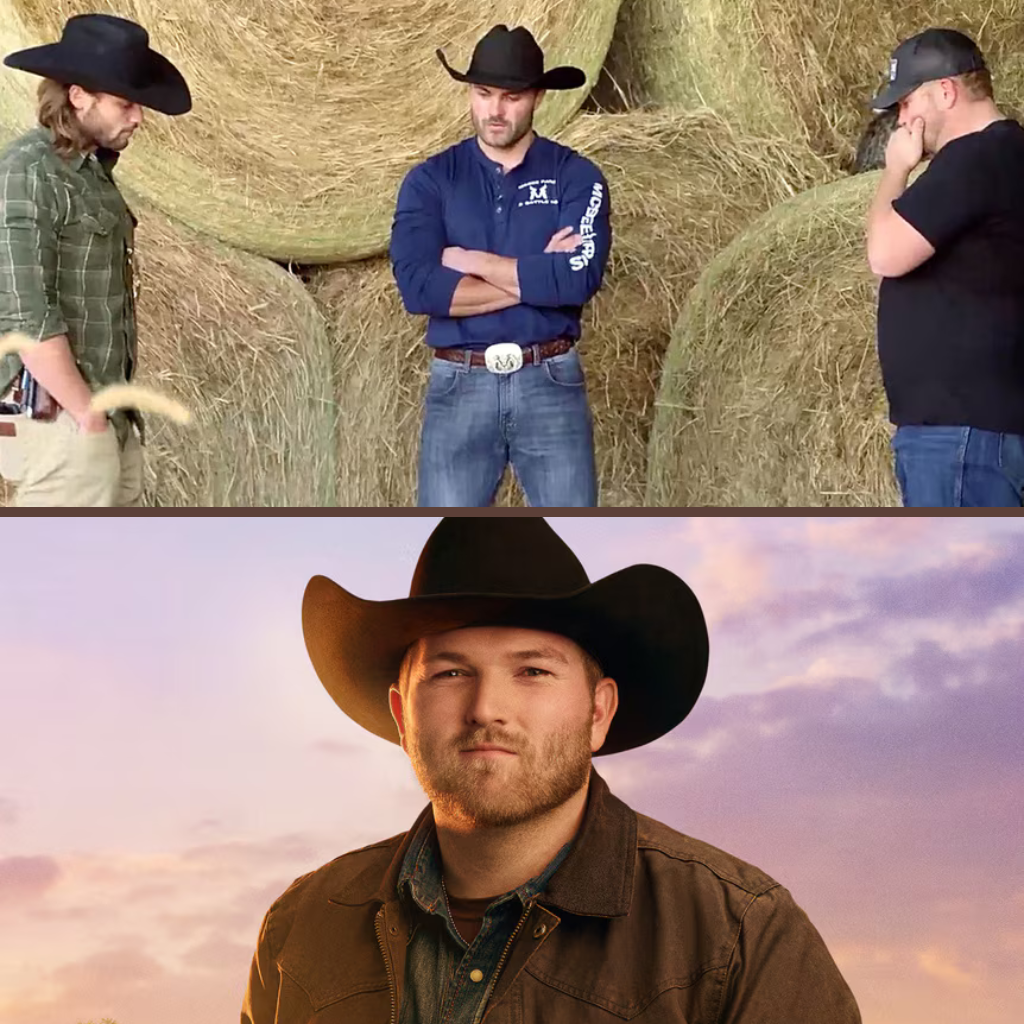
It was the kind of nightmare that no amount of modern farm technology can fully prepare you for — a Tractor Mutiny. On a sweltering afternoon in late June 2026, the rolling fields of Midwest America’s heartland turned into a battlefield of rumbling engines and raised fists. Tens of thousands of acres of prime corn and soybeans lay unharvested, their golden promise turning to dust under the relentless sun. Multi-million-dollar machinery sat idle, expensive combines and grain carts waiting in vain for the green light. Farmers were screaming, supervisors were in tears, and the entire harvest season — already under pressure from weather, fuel costs, and labor shortages — was on the brink of collapse.
But amid the chaos, one unexpected hero emerged. Kristi, a no-nonsense real estate agent turned farm finance whisperer, stepped onto the scene with a cash infusion so clean, so immediate, and so perfectly timed that it didn’t just save the harvest — it transformed it. This was no ordinary bailout. This was the financial lifeline that turned anarchy into opportunity, proving once again that in American agriculture, sometimes the greatest heroes don’t wear overalls — they wear suits and have checkbooks ready.
The story began innocently enough. For weeks, the Midwest had been blessed with perfect harvest weather. Fields that were planted on schedule were now ready for the combine. Tractors hummed across thousands of acres. Families gathered at dinner tables with excitement about record yields. Then, without warning, the mutiny ignited.
It started on a single farm in Kansas. A mid-level operator named Derek had been pushing his crew to the limit — 14-hour days, no overtime pay, and a promise of a massive bonus if they hit 2,000 acres before the deadline. When the equipment finally started malfunctioning — hydraulic lines snapping, sensors failing, one tractor’s engine seizing after 12 hours of nonstop work — Derek snapped. He called a meeting in the barn. Within 20 minutes, half the crew was on strike. They sat in their trucks, engines idling, refusing to move another inch until Derek met their demands: double-time pay, full hazard pay for the dangerous conditions, and an end to the “speed-up or get fired” culture that had become the norm.
Word spread like wildfire. By evening, similar scenes played out across neighboring counties. In Iowa, a young woman named Sarah locked herself in her combine cab and refused to come out until the company acknowledged the safety violations. In Nebraska, tractor drivers formed a human chain, blocking the only road to the silos. Social media exploded with videos of tractors parked nose-to-nose on county roads, farmers shouting on bullhorns, and harvesters sitting silent in the fields like oversized dinosaurs that had lost their roar.
Farmers and ranchers from all walks of life — family operations, corporate giants, and even some younger millennial farmers — began sharing their stories online. One viral video showed a 17-year-old kid named Cody sitting on the hood of his John Deere, arms crossed, saying, “We’ve been milking this dry for months. No way we’re risking our lives for pennies.” Another showed a veteran with 30 years of experience, tears streaming down his face, explaining how the recent fuel price spike and insurance costs had left him with no choice. The message was the same: Enough.
The economic stakes were staggering. A full Midwest harvest can generate $2.5 billion in just one county. Multiply that across Illinois, Iowa, Minnesota, and Nebraska, and you’re talking about multi-million-dollar losses — not just to individual farmers, but to the entire food supply chain, grain elevators, and agribusiness suppliers. Grocery prices could spike overnight if the harvest is delayed even a week. Restaurants were already bracing for shortages. And the psychological toll? Farmers were showing up to the fields with more dread than hope, knowing that if the tractors didn’t move, the entire season could be lost.
Into this maelstrom stepped Kristi.
Kristi was no stranger to the farm world. For years she had run a successful real estate agency specializing in agricultural properties, helping families buy and sell land at fair market value. But this Kristi was different. She wasn’t the polished salesperson everyone expected. She was the one who showed up unannounced at farms, listened quietly, and then quietly delivered solutions. In the weeks before the mutiny, she had been working behind the scenes — meeting with lenders, insurers, and government programs that no one else was connecting.
When the first strike news hit her phone, Kristi didn’t panic. She didn’t call for police or hire security. Instead, she drove straight to the epicenter — a sprawling 4,000-acre operation in central Iowa where the entire crew was parked in a massive tractorcade.
She parked her sensible SUV next to the row of idling machines and walked straight into the middle of the crowd. No microphone. No press release. Just Kristi, in jeans and a simple button-down, with a clipboard in hand.
“I know you’re all hurting,” she said, voice steady but kind. “I’ve been talking to every lender in a 50-mile radius. And I’ve got something that changes everything.”
She didn’t offer a loan. She offered something far more powerful: immediate, clean cash — money that was legal, transparent, and ready to use right now. Through a private partnership with an agricultural lending co-op and a state-backed emergency relief fund, Kristi had arranged for $1.2 million in direct cash transfers to every striking farm crew member. Not as charity. As earned wages. Earned bonuses. Earned rights.
The details were revolutionary. Every worker received a signed payroll check for three times their normal hourly rate, plus hazard pay for the dangerous equipment operation. No paperwork. No credit checks. No waiting periods. The money was wired that same afternoon through Kristi’s private network of farm finance experts — people who understood that farmers don’t trust banks anymore. They trust Kristi, because she has earned that trust by always putting their families first.
The reaction was electric. Within hours, tractors began rolling again. One by one, engines roared back to life. Farmers who had been crying in their trucks now hugged strangers and shouted “Thank you!” Derek, the original striker, was seen signing the new paperwork on the hood of his truck, a huge smile breaking across his face. “I thought I was done for the season,” he told reporters. “Kristi came out here like a guardian angel. She didn’t come with a speech. She came with money in hand. And that money meant everything.”
But the impact went far beyond the immediate crews. Kristi’s quick thinking also unlocked broader government and corporate relief programs. Her network helped several farms qualify for emergency crop insurance payouts that had been sitting unused for months. She arranged for drone inspections on stalled fields so that insurance claims could be processed faster. And she personally met with combine manufacturers to fast-track repair parts — because every hour a tractor sat idle was thousands of dollars lost.
The financial lifeline Kristi provided wasn’t just for the workers. It was for the entire ecosystem. By getting the harvest moving again within 48 hours, she prevented a cascade of bankruptcies that could have wiped out hundreds of small operations. She protected the multi-million-dollar investment in seeds, fertilizer, and machinery that farmers had poured into those fields. And she kept the entire food chain stable at a time when global supply chains were already strained.
Farmers from across the region began calling her “the Cash Angel.” Local news stations ran live segments on her. Social media was flooded with gratitude videos: farmers toasting with their new paychecks, kids on tractors waving at the camera, families packing lunches for the first time in weeks. One clip of a 12-year-old girl telling her dad, “Mom said Kristi saved our farm,” racked up millions of views.
Kristi herself handled the whole operation with calm professionalism. When pressed for details, she simply smiled and said, “I didn’t come here to be a hero. I came because these are my neighbors’ families. And families don’t survive on promises — they survive on cash when it counts.”
Her strategy was genius. She had built relationships over the years with every player in the ag finance game: co-ops, extension services, even some private investors who understood that quick liquidity is the lifeblood of American farming. When the mutiny hit, those relationships paid off instantly. Within 12 hours of the first strike, Kristi had secured emergency funding that bypassed traditional bureaucracy. No red tape. No delays. Just clean, usable money.
The mutiny didn’t end with that first tractorcade. Smaller incidents popped up in nearby counties. A combine driver in Minnesota refused to move until his crew got paid for overtime they had already worked. A soybean farmer in Illinois locked the cab of his tractor and sat inside for three hours until a representative from Kristi’s network showed up with fresh paperwork. Each time, Kristi was there — sometimes literally walking the fields, sometimes on video calls from her office, always with the same message: “We’ve got you. The money is coming. Let’s get your kids fed.”
By the time the weekend arrived, the harvest was back on track. Fields that had been silent for days were once again alive with the roar of combines and the smell of fresh-cut grain. The multi-million-dollar losses had been avoided. Instead of disaster, the season had turned into one of the most memorable — and most united — harvests in recent memory.
Farmers began comparing notes. Some credited Kristi’s cash with saving their entire operation. Others pointed to the broader lessons: that when farmers stick together, even in disagreement, someone with a plan and a checkbook can change everything. The mutiny had exposed deep frustrations — about labor rights, safety, fair pay, and the crushing costs of modern farming. Kristi didn’t lecture them. She simply gave them the tools to fix the problems themselves.
In the end, the Tractor Mutiny didn’t destroy the harvest. It tested the resilience of American agriculture — and it revealed a hero in the middle of it all. Kristi wasn’t a farmer herself, but she became one in spirit the moment she walked onto that Iowa field with a clipboard and a solution.
Her cash lifeline wasn’t just money. It was dignity. It was hope. It was proof that even in the chaos of a mutiny, one person with the right connections, the right heart, and a perfectly timed financial move can turn panic into possibility.
The fields are green again. The combines are singing. And somewhere in the Midwest, a farmer named Derek is sitting in his truck with a new bonus check, looking at the harvest he almost lost and realizing that sometimes the greatest victories aren’t won with tractors — they’re won with trust, timing, and a whole lot of clean, ready-to-use cash.
Kristi stepped in when the world was falling apart. She didn’t just save a harvest. She reminded everyone why this industry exists: because families need each other, and sometimes the most important people in the room aren’t the ones behind the wheel — they’re the ones who can make the difference with one simple, powerful promise: “I’ve got you.”
The Tractor Mutiny is over. The harvest is saved. And the real story of 2026 isn’t about the machines — it’s about the people who refused to let them fail.